AUGUST 23, 2024
Bourbon is a quintessentially American product—in our estimation, just as much a part of our heritage as the American dream itself.
And while many assume that bourbon is strictly from Kentucky, the regulations—at least as far as geography goes—state that the spirit must be produced in the United States.
As Manhattan’s first legal whiskey distillery since Prohibition, we’re honored to bring the art and science of distilling bourbon back to New York City.
Whether you’re new to whiskey and looking to learn more or curious about bourbon’s history and what makes it unique, this guide will tell you what you need to know.
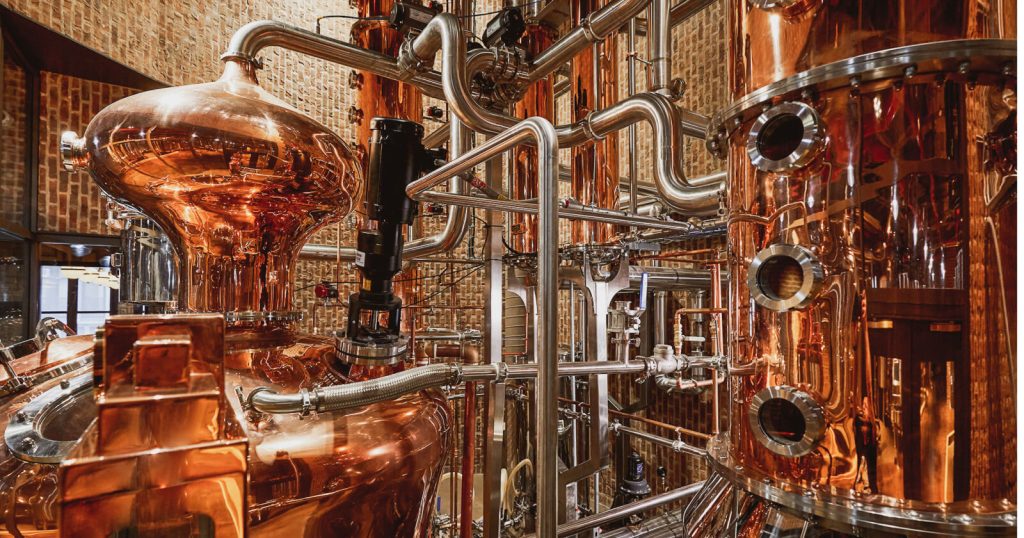
INTRODUCTION TO BOURBON WHISKEY
To make bourbon, you must follow these rules:
- The spirit must be produced in the United States.
- The grain used in the mash (what bourbon is distilled from) must be at least 51% corn.
- The spirit must be aged in new, charred oak barrels.
- The spirit coming out of the still is a maximum of 80% alcohol (160 proof).
- When placed in the barrel, the spirit must be no more than 62.5% alcohol by volume (ABV).
- The bottled spirit must be a minimum of 40% ABV (80 proof).
- It must not contain any flavoring or coloring.
Bourbon rules bear similarities to other types of whiskey but stand out for the high corn content and use of new oak barrels.
Scotch whisky, for example, can use older barrels, and the mash is 100% malted barley—no corn. Additionally, Scotch must be aged for a minimum of three years. There is no aging requirement for bourbon. To be classified as straight bourbon whiskey, it must be aged for a minimum of two years in new, charred oak barrels but many bourbons are aged significantly longer for a richer flavor profile.
Lastly, the issue of place is key. Scotch can only be produced in Scotland, while bourbon is made only in America.
HISTORY OF BOURBON
Bourbon has been produced in the US since the 1800s, but its origins go back to the 17th century when Dutch, Scottish, German, British, and French settlers brought their distilling craft to our shores. Corn was a popular base product as it was plentiful, sweet, and grew faster than other grains.
In 1791, George Washington enacted an unpopular distilling tax, after which many distillers fled to Kentucky (not that they were exempt from the law there, but that’s what happened).
Whiskey produced during this time came to be known as Kentucky whiskey. Bourbon County was named after the French royal family to recognize their support during the American Revolution, and whiskey shipped from there was labeled Bourbon. Corn whiskey from neighboring states also started using the term, and by the late 1800s, distillers came together to develop rules that would distinguish their product from other whiskies on the market.
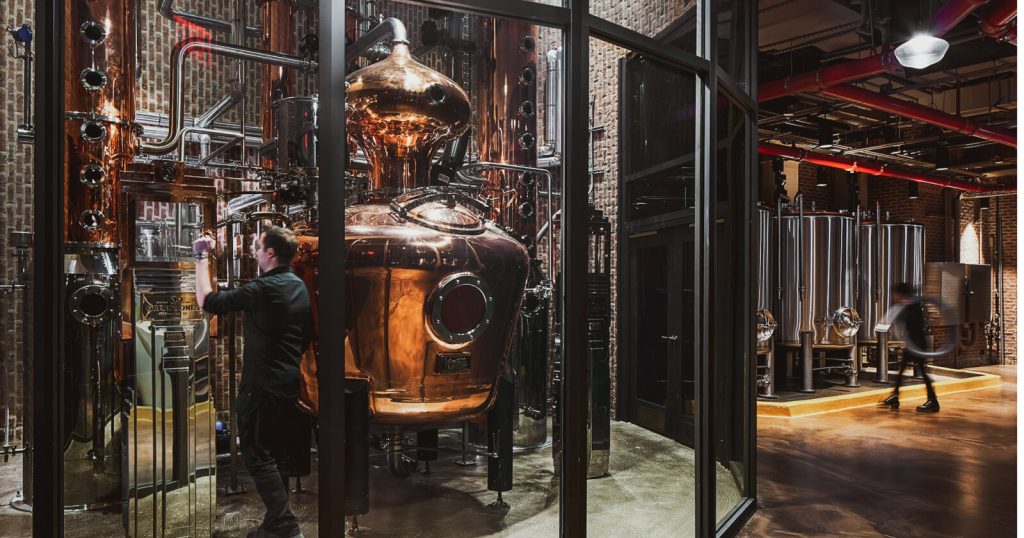
TYPES OF BOURBON
There are six main types of bourbon:
- High corn indicates the mash is mostly (or all) corn.
- High rye means what’s not corn is mostly rye.
- Wheated bourbon contains wheat instead of rye.
- Single barrel bourbon is bottled from a single cask and is generally done when the distiller feels a particular barrel of whiskey has a unique character.
- Cask strength is bottled without diluting to 40% ABV; in other words, it is over-proof and quite strong.
- Small-batch bourbon is not mass-produced and is usually made in small-capacity pot stills.
You might also see “straight bourbon” on some labels. This means the spirit is aged for at least two years in barrel.
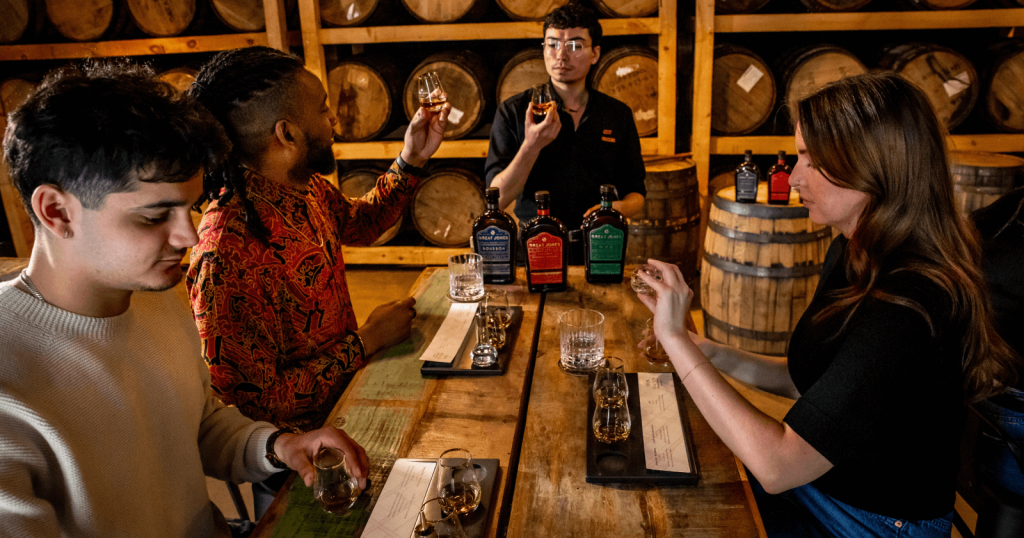
TASTING BOURBON
When tasting bourbon, we look for typical flavors and aromatic profiles. Common terms used to describe the aroma and taste of bourbon include:
- SWEET: flavors of vanilla and caramel, influenced by new oak barrels and the amount of corn in the mash.
- SPICY HOT: sensations like hot pepper are typical of cask strength and higher-proof bourbons.
- FLORAL aromas come from the yeast used to ferment the grains and often include fruity notes.
- BAKING SPICE: cinnamon, nutmeg, cardamom, allspice, and anise, which come from the wood.
- WOOD-FORWARD: takes on a woodier character when left to age in barrel for many years.
- GRAIN-FORWARD: results when the spirit spends less time in barrel and may have more subtle, bready flavors.
Bourbon is best enjoyed in the proper glass. A cut-crystal rocks glass is a good all-purpose go-to whether you want it neat (no ice), on the rocks (with ice), or in a cocktail.
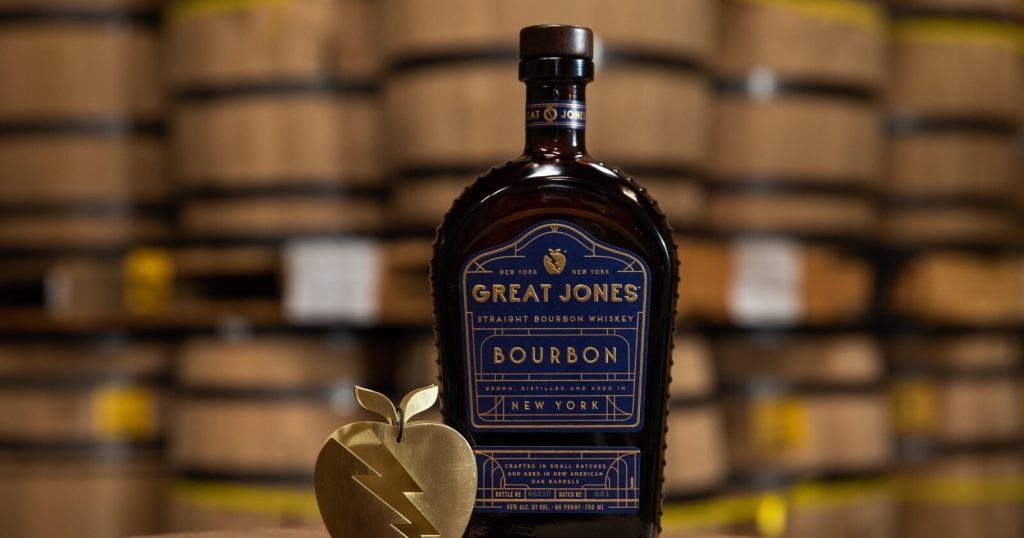
GET GREAT BOURBON DELIVERED TO YOUR DOOR OR VISIT US FOR A TASTING IN MANHATTAN
Have we piqued your interest in learning more about bourbon? Great Jones Distillery tours are the perfect way to get up close and personal with the bourbon distillation process. If you are not local to NYC, you can still enrich your palate by ordering a bottle or two of Great Jones Straight Bourbon and having it delivered straight to your door.
Cheers!